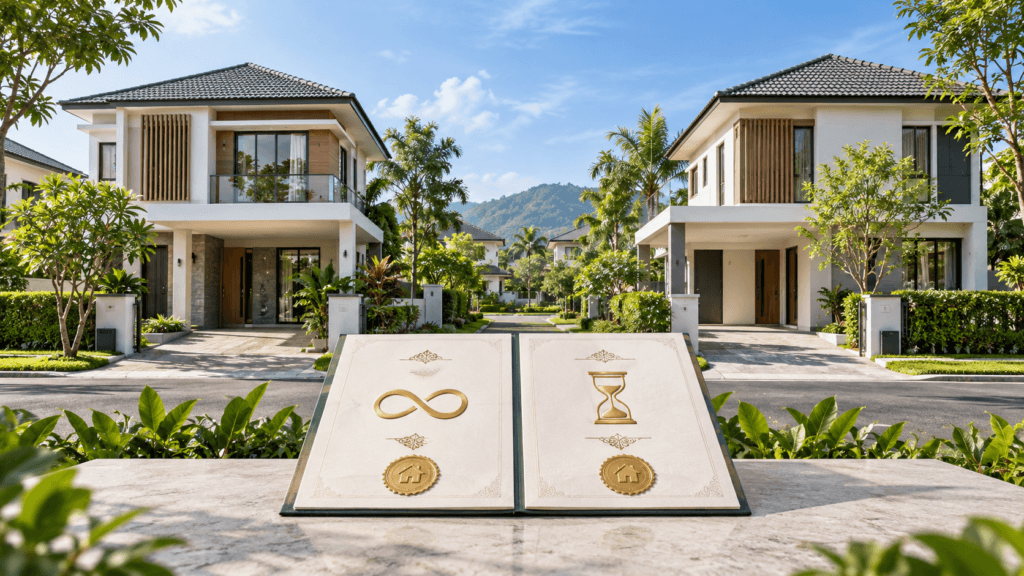
Freehold vs Leasehold Malaysia: Which Should You Buy?
When searching for a home in Malaysia, you will often see the words freehold and leasehold in property advertisements. Many buyers immediately assume that freehold is always better, while leasehold should be avoided.
The reality is more nuanced.
Freehold and leasehold describe how long the land is held, but tenure is only one part of a property purchase. Location, price, remaining lease, neighbourhood, accessibility, property condition and your family’s long-term plans can have an even greater effect on whether a home is right for you.
This guide explains the difference between freehold and leasehold property in Malaysia and what you should check before making your decision.
What is a freehold property?
A freehold property generally means that ownership of the land is not limited to a fixed lease period.
The registered owner may continue holding the property and can usually transfer it to another person, subject to Malaysian land laws, planning requirements, title conditions and any restrictions stated on the individual title.
Freehold ownership does not mean that the owner can do anything with the property. Renovations may still require approval, land-use conditions must be followed, and some titles may contain restrictions in interest.
For strata properties such as condominiums, freehold normally refers to the tenure of the land on which the development is built. Owners must still comply with strata laws, management rules and maintenance obligations.
What is a leasehold property?
A leasehold property is held for a fixed period granted by the relevant State Authority. Malaysian residential properties commonly have leases such as 99 years, although other lease periods may exist.
The remaining lease becomes shorter as time passes.
For example, if a property was originally granted a 99-year lease 20 years ago, it may have approximately 79 years remaining. The lease normally runs from the commencement date stated on the title—not from the date the next buyer purchases the property.
A lease extension may be possible, but it should never be treated as automatic. It is subject to the relevant State Authority’s approval, procedures, conditions and premium applicable at that time.
Freehold vs leasehold property: quick comparison
| Factor | Freehold property | Leasehold property |
|---|---|---|
| Ownership period | No fixed lease expiry | Held for a specified number of years |
| Remaining tenure | Does not reduce annually | Becomes shorter over time |
| Purchase price | May command a premium in some locations | May be more affordable than comparable freehold property |
| Financing | Tenure is generally less of a concern | A short remaining lease may affect financing |
| Transfer process | Depends on restrictions stated on the title | State consent may be required where the title contains a restriction |
| Long-term ownership | Often attractive to buyers planning to keep the property for generations | Remaining lease becomes increasingly important over time |
| Lease extension | Not applicable | May be possible, subject to approval and payment |
| Resale demand | Often preferred by long-term owner-occupiers | Strong leasehold properties can still attract buyers, especially in good locations |
These are general comparisons. The actual title and conditions of each property must be checked individually.
Advantages of buying a freehold property
1. No diminishing lease period
The clearest advantage is that you do not have to watch the remaining tenure reduce each year. This can provide greater peace of mind if you intend to keep the home for a long time or eventually pass it to your children.
2. It may appeal to more future buyers
Many Malaysian homebuyers prefer freehold property. This preference can support resale demand, particularly when buyers are comparing similar homes in similar locations.
However, freehold status alone does not guarantee that a property will appreciate. A poorly maintained freehold property in an inconvenient location may perform less favourably than a well-located leasehold development.
3. Fewer concerns about financing due to tenure
Banks assess many factors before approving financing, including the applicant’s income, commitments, credit profile and the property itself.
With a freehold property, buyers do not face the additional concern of a diminishing lease. For an older leasehold property, the bank may consider the remaining lease when deciding the financing amount and repayment tenure.
4. Suitable for long-term family ownership
Freehold property may be particularly attractive if you are buying a family home that you hope to retain across generations.
Nevertheless, your beneficiaries will still need to follow the proper inheritance and ownership-transfer procedures. Freehold does not mean that the property transfers automatically without legal administration.
Possible disadvantages of freehold property
1. It may cost more
In some locations, buyers may be willing to pay more for freehold tenure. You should decide whether that additional amount is worthwhile for your plans.
Paying a higher price simply for the word “freehold” may not be sensible if a more suitable and affordable home is available nearby.
2. Freehold does not guarantee better investment returns
Property value is affected by demand, location, accessibility, future development, property condition and the surrounding environment.
A leasehold home near employment centres, schools, public transport and established amenities may attract stronger demand than a freehold home in a less convenient area.
3. Restrictions may still apply
Some buyers assume that every freehold property can be transferred without additional approval. This is not always true.
A title may contain restrictions in interest requiring consent for certain dealings. The property could also be subject to Bumiputera conditions, Malay Reserve requirements or other limitations.
Always ask your solicitor to inspect the actual title.
Advantages of buying a leasehold property
1. It may offer a lower entry price
A leasehold property may be priced lower than a comparable freehold property, although this is not guaranteed.
For first-time buyers, the lower entry cost could make homeownership more achievable. It may also allow a family to choose a larger home or a better-connected location without stretching its budget too far.
2. Some leasehold properties are in excellent locations
Many mature and highly convenient areas contain leasehold developments. Rejecting every leasehold property could mean missing a suitable home near your workplace, children’s school, public transport or family support network.
Location can have a major influence on daily convenience, rental demand and resale interest.
3. A long remaining lease may be sufficient for your needs
A relatively new property with a long lease remaining can still serve a family for many decades.
The important figure is not only the original lease term. You should confirm the exact commencement date and calculate how many years remain when you purchase it.
Possible disadvantages of leasehold property
1. The lease reduces over time
The remaining lease shortens each year. This may become more important when the property gets older, particularly when you later want to sell, refinance or transfer it.
A leasehold property with many years remaining is different from one approaching the later part of its tenure. They should not be evaluated in the same way.
2. Financing may become more difficult as the lease shortens
Banks have their own lending policies and risk assessments. When the remaining lease becomes short, buyers may receive a shorter financing tenure, a lower margin of financing or fewer available financing options.
Before paying a booking fee for an older leasehold property, consider obtaining an initial assessment from a bank or mortgage adviser.
3. A transfer may take longer if consent is required
If the title contains a restriction requiring the State Authority’s consent to transfer, the transaction may need additional processing time.
This is not determined by the word “leasehold” alone. Check the actual restriction in interest on the title instead of relying only on a property advertisement.
4. Extending the lease may involve a substantial premium
An owner may be able to apply for an extension, but approval is not guaranteed. The process, premium and conditions depend on the relevant state rules and circumstances at the time of application.
Do not buy a short-lease property based only on an informal promise that extending it will be simple or inexpensive.
Is freehold always better than leasehold?
Not necessarily.
Imagine you are comparing these two options:
A freehold home located far from your workplace, schools and daily amenities
A leasehold home with a long remaining lease in an established and convenient neighbourhood
The leasehold home may provide a better daily lifestyle and stronger demand because of its location.
Alternatively, if two properties have similar prices, layouts, locations and conditions, many buyers would prefer the freehold option because there is no diminishing lease period.
The correct comparison is not simply freehold versus leasehold. It is:
Property A versus Property B, including tenure, price, location, layout, condition and affordability.
Does leasehold property have lower resale value?
Not automatically.
A leasehold property in a desirable area can still enjoy healthy resale demand, especially while a substantial lease period remains. Buyers may value its accessibility, facilities and neighbourhood more than its tenure.
However, resale may become more challenging as the lease shortens because future buyers may face financing limitations or worry about extension costs.
When buying leasehold property, consider not only whether it suits you today but also how much lease may remain when you expect to sell it.
Can leasehold property be inherited?
A leasehold interest can generally be transferred to beneficiaries through the proper estate-administration process, subject to the title conditions and remaining lease.
The beneficiaries receive the property with the lease period that remains. The tenure does not restart when the property is inherited or sold.
Both freehold and leasehold properties require proper legal procedures when an owner dies. Buyers planning for long-term family ownership should consider preparing a will and obtaining suitable estate-planning advice.
Questions to ask before buying
Before booking either a freehold or leasehold property, ask the developer, seller or solicitor:
Is the tenure freehold or leasehold?
If leasehold, what is the exact lease commencement date?
How many years remain?
Is an individual or strata title available?
Are there any restrictions in interest?
Is State Authority consent required for the transfer?
Are there Bumiputera, Malay Reserve or other ownership restrictions?
Are there outstanding charges, caveats or encumbrances?
Can my preferred bank finance the property on suitable terms?
Does the property fit my family’s budget and long-term plans?
For a subsale property, ask your conveyancing solicitor to conduct the appropriate title search and explain the title conditions before you commit to the purchase.
Which tenure is better for first-time homebuyers?
For a first-time buyer, affordability should remain one of the biggest considerations.
A freehold home is not a good purchase if its monthly instalment leaves you without enough money for living expenses, emergencies, maintenance and other commitments. Similarly, a cheap leasehold property may not be a bargain if the remaining lease is too short or financing is difficult.
Before choosing, estimate your comfortable monthly instalment and total upfront cost. You can also read our guide on how much house you can afford in Malaysia.
After setting your budget, compare the actual homes available within that range.
Freehold homes in Bandar Sri Sendayan
Homebuyers looking in the Seremban area can explore freehold landed properties in Bandar Sri Sendayan.
Depending on current availability, buyers may compare different layouts, built-up sizes and price ranges at developments such as Laman Sendayan and Eka Heights.
If you are still deciding between house designs, read our comparison of single storey vs double storey houses for Malaysian families.
Always confirm the tenure, current selling price, package and title details for the particular unit you are considering.
Final verdict: should you buy freehold or leasehold?
Choose freehold if you value long-term ownership without a diminishing lease, intend to keep the property for many years and the home is within your comfortable budget.
Consider leasehold if it offers a stronger location, better lifestyle or more suitable price—and the remaining lease and financing terms are acceptable.
Do not buy a poor property simply because it is freehold, and do not reject a good property simply because it is leasehold.
The best home is the one that combines suitable tenure with a good location, practical layout, manageable monthly commitment and a neighbourhood your family can enjoy.
Looking for a freehold landed home in Bandar Sri Sendayan? WhatsApp Chris at 016-868 9653 with your preferred budget, house type and number of bedrooms. I’ll help you compare suitable options and arrange a viewing.
Contact your Sendayan Property Specialist today: Chat with us now or visit menus below for the latest projects floor plans and pricing.

CHAT NOW
Direct Matrix Sales Staff